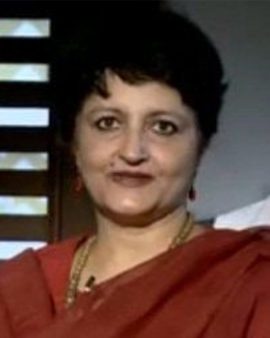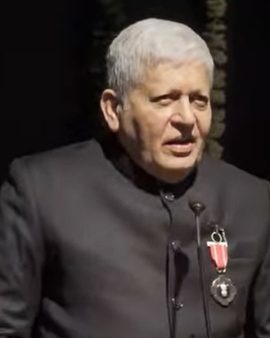


Syeda Saiyidain Hameed: A Life of Conscience, Scholarship, and Public Service
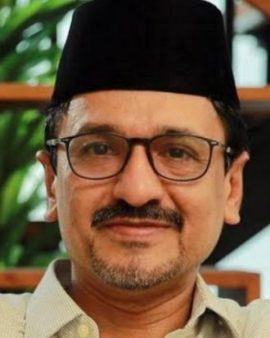
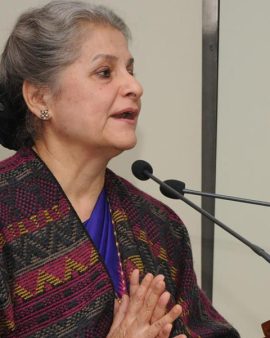
Syeda Saiyidain Hameed is one of India’s most respected voices at the intersection of women’s rights, minority empowerment, and constitutional values. An activist, writer, and public intellectual, her life’s work reflects a sustained commitment to justice rooted in scholarship, empathy, and moral courage. Over decades, she has emerged as a bridge between grassroots realities and policy-making spaces, combining quiet persistence with principled advocacy.
Born into an intellectually rich and socially conscious milieu, Syeda Saiyidain Hameed was shaped early by the values of education, inquiry, and service. Her academic grounding—particularly her deep engagement with Islamic studies, history, and gender—has profoundly influenced her activism. Unlike approaches that frame faith and feminism as oppositional, Hameed has consistently argued that justice, dignity, and equality are intrinsic to ethical and religious traditions, and must be reclaimed through informed interpretation and dialogue.
She came into national prominence through her work with the Planning Commission of India, where she served as a member and later as a special invitee. In these roles, she played a crucial part in shaping policy discussions on women, minorities, education, and social inclusion. Her contribution was marked by a rare ability to translate lived experiences—especially of marginalized women—into policy language without stripping them of nuance or humanity.
Syeda Saiyidain Hameed is perhaps best known for her fearless advocacy on issues concerning Muslim women’s rights. At a time when debates around personal law were often polarized between conservative resistance and external stereotyping, she carved out a principled middle ground. She challenged patriarchal practices while firmly opposing cultural vilification, insisting that reform must emerge from within communities through knowledge, dialogue, and constitutional safeguards.
Her activism has never been loud or confrontational, yet it has been deeply influential. Hameed’s strength lies in her moral clarity and intellectual honesty. Whether speaking on education, communal harmony, or women’s empowerment, she has consistently emphasized that democracy must be judged by how it treats its most vulnerable citizens. For her, activism is not a moment of protest but a lifelong discipline of engagement.
As a writer and thinker, Syeda Saiyidain Hameed has contributed extensively to public discourse through essays, reports, and lectures. Her writing is marked by empathy and rigor, avoiding ideological shortcuts in favor of careful analysis. She is particularly attentive to the everyday struggles of women—access to education, healthcare, legal protection, and dignity—issues that are often lost in abstract debates.
Despite her proximity to power at various points, Hameed has remained deeply grounded. Colleagues and contemporaries describe her as gentle yet resolute, deeply principled, and unwavering in her commitment to secularism and pluralism. She believes that activism must be anchored in listening, and that lasting change is built through patience as much as passion.
In an era increasingly defined by polarization and noise, Syeda Saiyidain Hameed represents a quieter, enduring tradition of Indian activism—one rooted in conscience, scholarship, and compassion. Her life’s work stands as a reminder that meaningful social change does not always arrive through dramatic gestures, but through sustained effort, ethical courage, and an unshakeable belief in human dignity.